Health Insurance Fraud Detection With Machine Learning
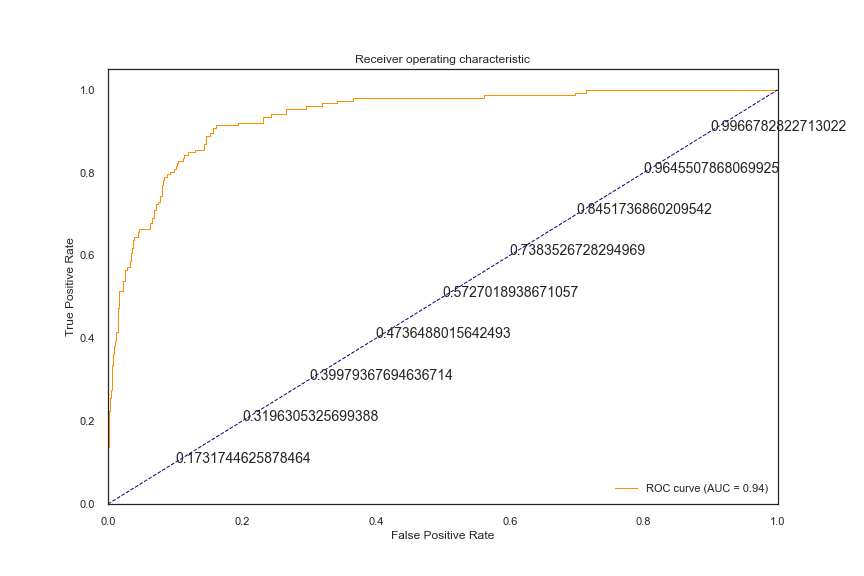
Machine-learning fraud detection flags suspicious health-insurance claims in near real time for a US insurer, with ~0.90 accuracy and ~0.80 AUROC.
- ~0.90
- model accuracy
- ~0.80
- AUROC score
- ~0.55
- kappa score
A US insurance provider watched claims volumes rise and suspected misuse in its Medicare and other health-related plans. We built and deployed a fraud detection system that screens claims automatically inside the existing claims management workflow, raising near-real-time alerts on suspicious activity — protecting the insurer's bottom line and its customers from inflated premiums.
The problem
Healthcare fraud rarely comes from a single bad actor. It frequently involves collusion among physicians, providers, and beneficiaries — patterns that conventional claim-by-claim screening misses. The insurer needed to spot these networks without burying its audit team in false positives, and it needed to understand exactly why any given claim was flagged.
What we built
Feature engineering for fraud rings
We aggregated numerical features — total claim amounts, frequency of visits — at the provider level, surfacing unusual billing patterns that slip through conventional screening. By examining how multiple actors interact (the same provider and group of beneficiaries recurring across suspicious claims), the model exposes potential fraud hotspots.
An interpretable classifier
We chose logistic regression for its balance of accuracy, computational efficiency, and explainability: the insurer can see exactly which features weighed most in labeling a claim suspicious. Adjustable thresholds let the business tune sensitivity (recall) against precision as its needs change.
Results
The deployed model reached ~0.90 accuracy, ~0.80 AUROC, and a ~0.55 Kappa score — strong discriminatory power against fraudulent claims. Fine-tuning the threshold reduces false positives, so honest providers aren't unfairly flagged, while detection rates stay rigorous.
Impact
- Real-time alerts. Integrated into the claims workflow, the model raises automated red flags on suspicious claims and significantly reduces the manual audit burden.
- Targeted investigations. High-risk providers are isolated quickly, so the client can investigate where it counts and curtail malicious activity faster.
- Regulatory value. Insights from the system help government authorities and policymakers tighten rules around health claims.
- Stable premiums. Rooting out fraud keeps premiums stable and prevents undue cost inflation across the healthcare sector — benefiting patients, businesses, and taxpayers.
Next steps
The system is built to keep improving. Feeding newly confirmed fraud cases back into training keeps the model current with evolving schemes. Ensemble techniques — combining logistic regression with random forests or gradient boosting — can harden results further as fraud tactics grow more sophisticated. And vectorizing ICD-9 medical codes (via Count Vectorizer, for example) would reveal deeper patterns in how procedures and diagnoses relate, boosting accuracy on niche fraud scenarios.
Frequently asked questions
- How accurate is machine learning at detecting insurance fraud?
- In this production deployment, the model reached roughly 0.90 accuracy and 0.80 AUROC on health-insurance claims, with a kappa score around 0.55. Accuracy alone is not the goal: adjustable thresholds let the insurer trade recall against precision as audit capacity and risk appetite change.
- Why use logistic regression instead of deep learning for fraud detection?
- Because every flag is an accusation someone must act on. Logistic regression makes each decision explainable: the insurer can see exactly which features weighed most in labeling a claim suspicious. Ensembles and boosting can be layered on later, but the transparent version earns trust first.
- How does the system reduce false positives?
- Features are aggregated at the provider level, so patterns of collusion become visible without flagging honest one-off claims, and the decision threshold is tunable so investigation volume matches the audit team's capacity.
- Can fraud detection integrate with an existing claims system?
- Yes. This model was integrated into the insurer's existing claims management workflow and raises near-real-time alerts on suspicious claims, so screening happens inside the process the team already uses.