Optimizing Loan Disbursement Through Repayment Pattern Analysis
An SVM credit scoring model helps a Pakistani microfinance institution classify repayment risk and steer loan disbursement through COVID-19 volatility.
Kashf Foundation, a pioneering microfinance institution in Pakistan, faced a question the COVID-19 pandemic forced on every lender: were its clients' borrowing and repayment patterns changing for good, or just for now? They brought us in to analyze repayment behavior across their branch network and build a credit scoring model that could support loan disbursement decisions under that uncertainty.
The problem
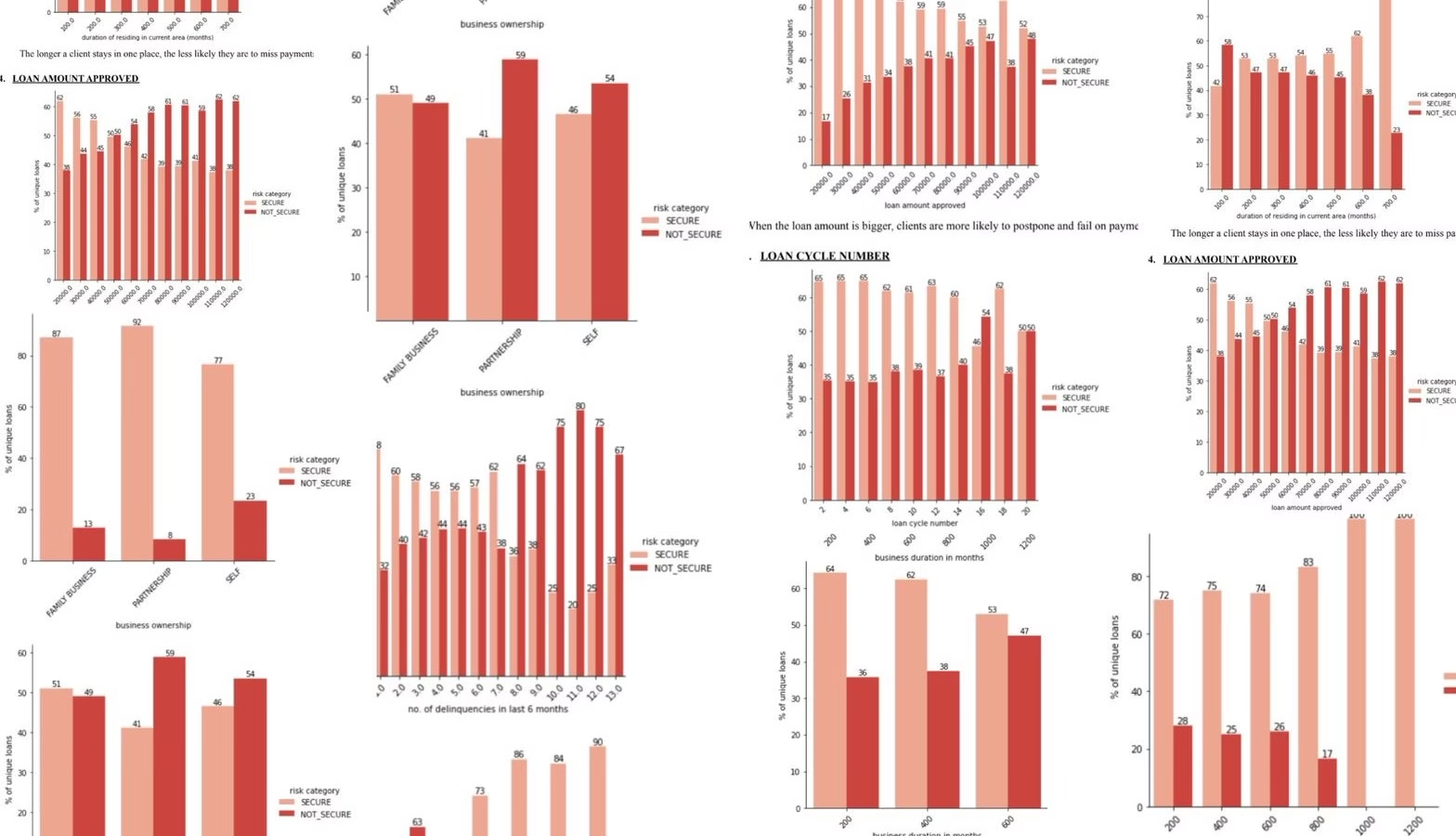
The pandemic had disrupted client behavior in ways that made historical assumptions unreliable. Kashf needed to understand which shifts in repayment patterns were meaningful, which indicators still predicted risk, and how to keep approving loans responsibly while the data itself was in flux. The analysis covered data from multiple branches, with every loan classified into one of two risk groups:
- Secure — payments made on time
- Not secure — payments delayed or overdue
What we built
We delivered two things: a repayment pattern analysis that separated durable signals from pandemic noise, and an SVM-based credit scoring model that turns those signals into loan approval guidance.
Feature selection
We measured the salient changes in client behavior to find trends the organization could use for risk management. Loan amount, loan cycle number, and family size emerged as significant predictors of repayment behavior. Factors that had lost predictive power in the current dataset — business duration and prior delinquencies — were excluded.
The credit scoring model
The SVM model assesses repayment risk from features including net disposable income (NDI), repayment history, and loan utilization ratio. Credit scores were calibrated against default probabilities, so each score maps directly to an actionable loan approval decision rather than an abstract rating.
What we recommended
The analysis produced three practical recommendations alongside the model:
- Hold off on retraining. The recent data was volatile, and the behavioral shifts were likely temporary. Retraining immediately would have baked pandemic-era noise into the model and disrupted the stability of what it had already learned. We advised waiting for client behavior to settle.
- Sample branches at finer grain. We refined the branch sampling technique to capture a more detailed picture of high-risk loans. Including loans overdue over shorter timeframes makes it easier to identify branches with higher delinquency rates and improves predictive accuracy.
- Watch for normalization. We tracked whether key features showed signs of returning to their pre-pandemic distributions as lockdowns eased. Future retraining would then either confirm the original distribution or surface new significant factors for identifying risk categories.
Impact
Kashf Foundation gained a calibrated, evidence-based framework for loan disbursement at a moment when intuition and historical precedent were least trustworthy. The model gives loan officers a consistent risk classification for each application, and the retraining roadmap protects that consistency as post-pandemic behavior stabilizes.