product · did reputation management for vicidial
Every lead dials from a clean, local number.
DIDfleet is the layer beside your VICIdial that decides which number each lead dials from, keeps every number's workload inside what it can carry, and keeps good leads alive. You keep your dialer, your numbers and your carrier.
Read-only to start. Thirty days of your dial logs, and you get the map of what is burning.
90.1%
of calls connect, from 80.4%
63%
fewer carrier declines
23,703
leads brought back
15 min
full fleet regrade
the problem
Calls are lost before a phone ever rings
12.8%
of calls declined by carriers
Measured on a shared area-code pool, from the dialer's own log. A managed fleet runs about a third of that.
30,170
leads retired by one carrier error
One dialer had permanently stopped calling them after a single transient failure. 13,410 had connected on an earlier call.
3,601
fresh leads loaded with a bad caller ID
One morning's load put the wrong value in the caller-ID field. Dialed like that, every one fails on its first call.
the 15-minute loop
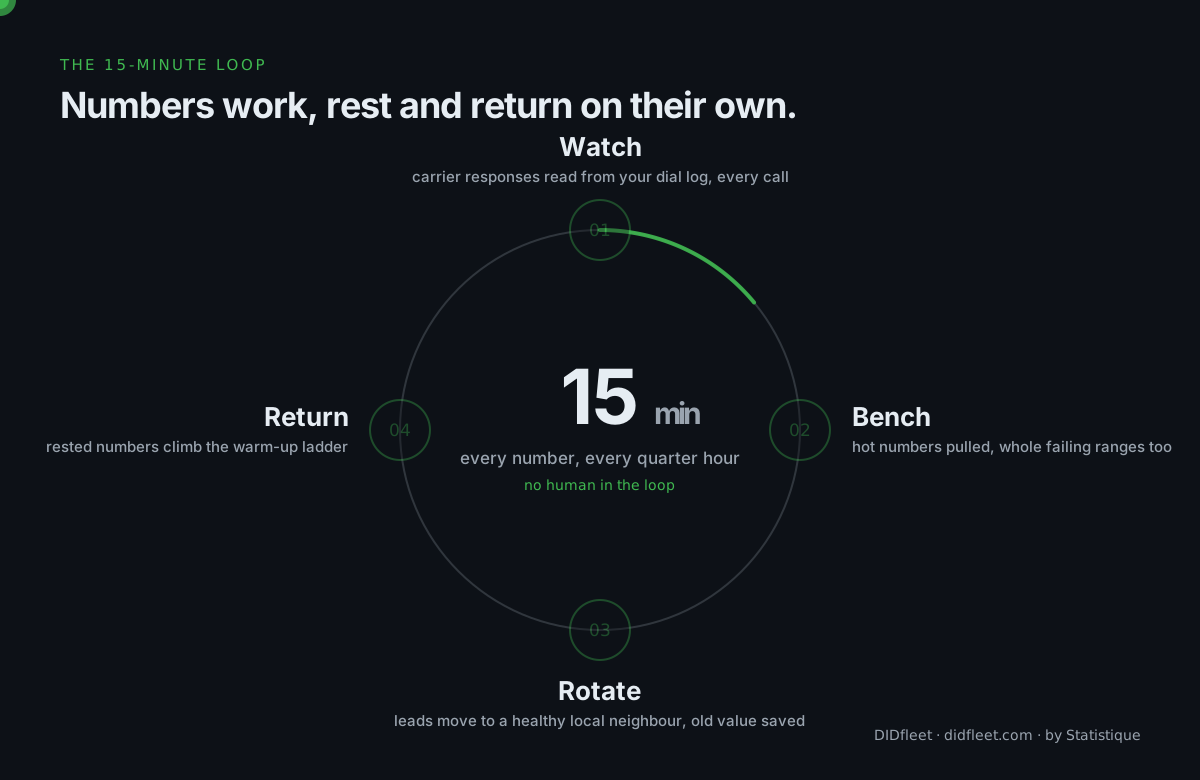
Numbers work, rest and return on their own
- 01
Watch
Every number's carrier responses, read from your own dial log on every call. No lookups to buy.
- 02
Bench
Numbers that run hot are pulled. So are whole purchased ranges that fail as a unit.
- 03
Rotate
Their leads move to a healthy local neighbour inside the same cycle, with the old value saved first.
- 04
Return
Rested numbers come back up a warm-up ladder. New numbers start at the bottom of it.
what didfleet does
One field per lead. Everything else follows.
per-lead-cid
Every lead gets a clean local number
Chosen from the lead's ZIP, not just its area code: same rate center first, then metro, then state, from numbers with a healthy live record.
measured-caps
Every number carries what it can prove
Caps per number come from the measured dial rate and how seasoned the number is, counted against leads that can actually dial today.
bench-and-rotate
Hot numbers are benched, leads move on
Numbers running hot on carrier rejections are pulled, whole failing ranges with them, and their leads move to a healthy neighbour inside the same cycle.
warm-up-ladder
New numbers earn their load
10, 25, 45, then 75 dials a day before full load. Numbers that took heavy volume cool down before taking new leads.
lead-recovery
Leads stop dying for the wrong reasons
A lead retired by a transient carrier error comes back nightly, on evidence, with a revert file. A bad caller-ID value in a fresh load is caught within minutes.
re-homing
Leads come home
A lead that spilled onto a distant number is re-homed to a local one when a slot opens, in a capped batch each night.
measured on a live floor
Same leads, same lists. More calls reach the phone.
Before and after are carrier responses read from the dial log, not survey figures. The before period is the smaller sample: 2,639 dials against 49,369. Steady state since: 88.9% connect and 5.4% declined across 89,327 dials.
Calls that connect
+9.7 pointsShare of dials the carrier connected, 0 to 100% scale.
Calls declined by carriers
63% lowerSIP rejections read from the dial log, 0 to 20% scale.
+9.7 pts
more calls reach a phone
80.4% to 90.1% on the same lists. When the fleet was switched off by accident one morning, delivery fell four points before lunch. Switched back on, it recovered within the hour.
+12.5%
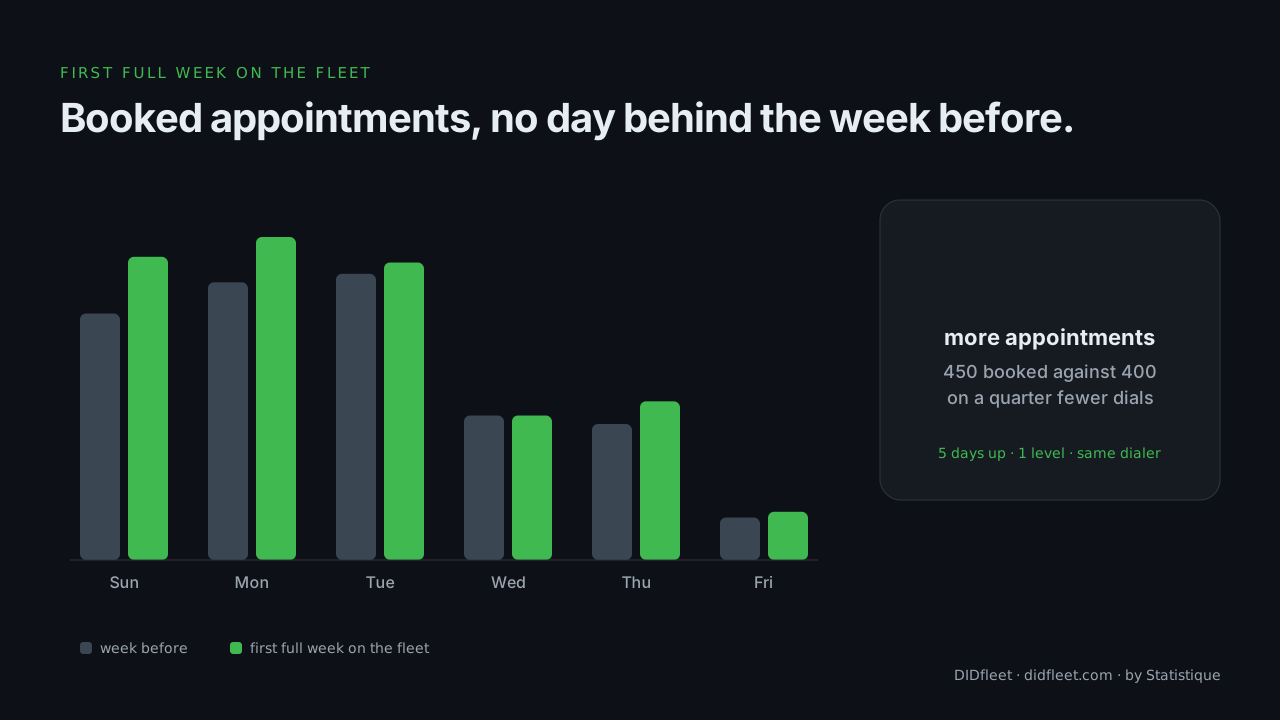
more appointments, on 25% fewer dials
The first full week on the fleet: 450 booked against 400 the week before, no day below the same day the prior week, with a quarter fewer dials to get there.
5x
and we show you the other lever
Fresh leads answer about five times as often as worn ones. The nightly reports put lead wear next to number health, so your spend goes where it moves the number.
operated, not just installed
Watchers that name what they see
Compliance
A do-not-call, booked or transferred lead that becomes dialable again is named within 5 minutes, with the status change that did it.
Pacing
When the dial level goes above what the agents on the floor can absorb, the alert gives the level, the safe ceiling and who changed it.
New ranges
A purchased range is graded as a unit while it seasons, so a failing range is flagged before any single number trips its own threshold.
Territories
Each territory is tracked against its own healthy floor, so one bad market cannot hide inside a good average.
Purchasing is computed nightly per area code from demand against surviving clean supply, with vendor dispute files carrying the evidence. No paid reputation lookups: in a sealed test, grading from carrier responses alone agreed with a paid lookup on 8 of 10 bad numbers.
getting started
Shadow first, measured, reversible
Live in about three weeks without touching what dials today. The latest install went from upload to a verified shadow run in under an hour.
- Week 1
Audit
Read-only. Thirty days of your dial logs graded into a map of what is burning: numbers, purchased ranges and territories.
- Week 1
Shadow
Installed beside your dialer. It computes every decision and writes nothing, until its numbers match yours.
- Week 2
Pilot
One campaign cuts over against a matched control. Same floor, same weekday baselines. The result is a number.
- Week 3
Cutover
One command to go live. Rollback is one file. Then the loops take over.
questions
Straight answers
Will this get me more conversations and appointments?
More of your calls will ring: on the same lists, connects went from 80.4% to 90.1% and carrier declines fell by 63%. More of your leads stay alive to be called. In the first live deployment the floor booked 12.5% more appointments in its first full week, on 25% fewer dials. The pilot puts your own number on it.
What does it change in my dialer?
One field on each lead: the caller ID that lead dials from. The nightly recovery job can also return a lead retired by a carrier error to a callable status. It does not touch campaigns, lists, agents, the dialplan or your carrier.
Is changing the caller ID per lead allowed?
Every number it assigns is one you own and that rings back to you, which is the line the Truth in Caller ID rules draw. It never invents or borrows a number. Your calling compliance stays your responsibility, and the compliance watcher helps you keep it.
What if it goes wrong?
Create one file and every write stops. Each write saved the previous value first, so any run can be rolled back to the row. It starts in shadow mode and does not go live without an explicit flag.
Do I need to buy reputation lookups?
No. It grades numbers from the carrier responses already in your dial log, on every call. In a sealed test that grading agreed with a paid lookup on 8 of 10 bad numbers.
Which dialers does it support?
VICIdial natively, which also covers GoAutoDial and OSDial with little change. Any platform that exposes a per-lead caller-ID field, a dial log with carrier response codes and lead locations through an API can be brought in next.
in production
The receipts
call centers2026
DIDfleet: The Caller-ID Fleet That Runs Itself
Every lead dials from a clean, local number. On one live floor: connects up from 80.4% to 90.1% on the same lists, carrier declines down 63%, 23,703 leads brought back, and 12.5% more appointments in the first full week on a quarter fewer dials.
+9.7 pts more calls connect, 80.4% to 90.1%
read →
call centers2026
AI Call Center Quality Assurance With 100% Call Coverage
A multimodal AI platform that scores every call-center recording for compliance, extracts structured data, and coaches agents, replacing sampled QA.
read →
call centers2026
Call Center Data Audit: Fixing a 5x Dialer Reporting Error
A forensic audit of 3M+ dialer records corrected a 5x reporting error and recovered a call center's true answer, rejection, and abandonment rates.
3M+ call records audited
read →
Start with a fleet audit.
Read-only. Thirty days of your dial logs and the list of numbers you own. You get back the share of your fleet that is burning, the purchased ranges failing as a unit, the territories left underserved, and what your next number order should be.
Request a fleet auditMeasured on a live VICIdial deployment, August to September 2026. Client anonymised; method available on request. Results vary with lead quality, carrier and dialing practice. DIDfleet assigns only numbers you own; calling compliance remains your responsibility.